



Google updated its consent mode to version 2. Discover all the new features and why implementing it is essential.
In late December 2022, the European Union issued a new regulation on digital markets, known as the Digital Markets Act (DMA). This regulation requires major digital players such as Google, Meta, Amazon, and Apple to ensure greater privacy and transparency regarding user data processing and storage.
To comply with this regulation, Google updated its Consent Mode to version 2, which became mandatory as of March 6, 2024.
If you rely on Google Ads as an advertising platform, upgrading your privacy and tracking consent management system to Consent Mode v2 is essential to keep your campaigns running effectively. Let’s explore what Consent Mode v2 involves and what happens if it isn’t configured.
What is Google Consent Mode?
Before diving into the details, it helps to take a step back and examine the privacy measures a website must adopt. In Europe, website owners must ensure compliance with the General Data Protection Regulation (GDPR) and obtain explicit user consent for cookie usage via a cookie banner. To guarantee proper transparency, granular options for managing cookie preferences must also be provided.
Where does Consent Mode fit in? Consent Mode is a feature that communicates user cookie consent status to Google’s platform. In short, by interacting with a Consent Management Platform (CMP) like Iubenda, Cookiebot, or OneTrust, Consent Mode receives user consent choices and dynamically regulates cookie firing for Google Analytics 4 and Google Ads.
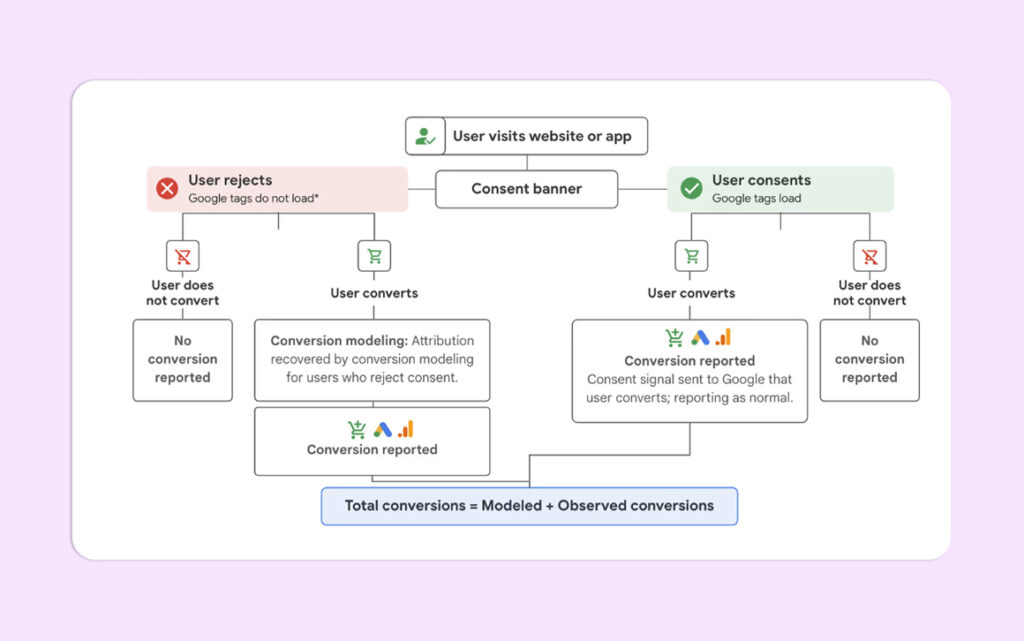
If a user grants consent, Google tags fire as normal within Google Tag Manager. Conversely, if a user denies consent, the tag sends anonymized, modeled user information without dropping cookies.
Google Consent Mode v2: two new parameters for data control
Consent Mode has existed for some time. It was previously an optional feature focused on gathering consensual data through two parameters: analytics_storage e ad_storage.
With increasingly strict EU privacy regulations, adoption became mandatory.
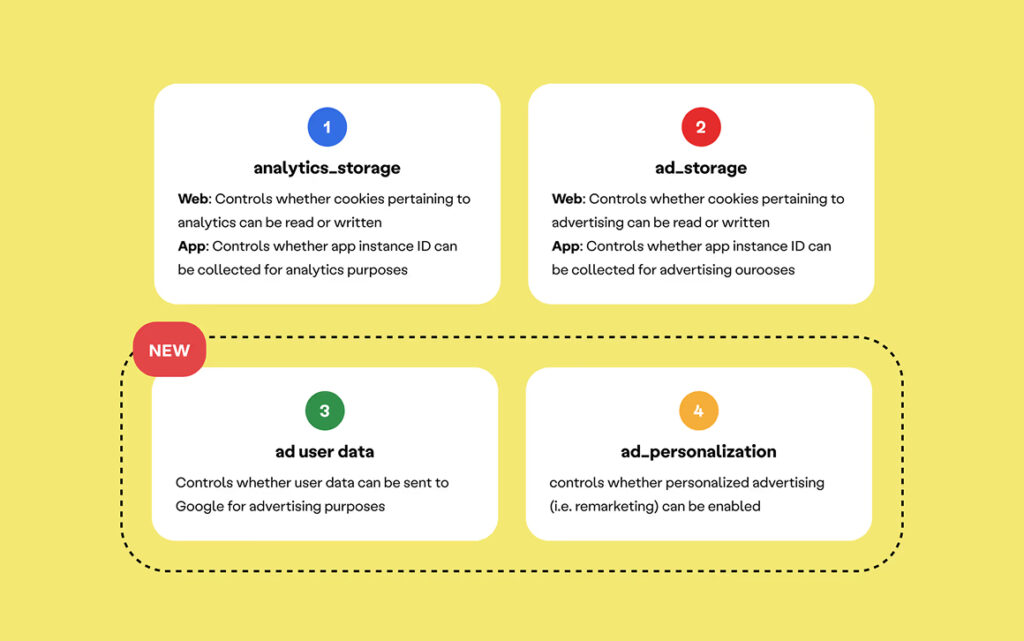
The main update in Consent Mode v2 is the introduction of two new consent status parameters:
- ad_user_data: Indicates whether user personal data can be used by Google for advertising purposes.
- ad_personalization: Signals to Google user consent for ad personalization.
These two parameters play a vital role in audience building and remarketing campaign optimization. Implementing these new parameters within your Consent Mode setup is required. This configuration can also be managed via server-side tracking.
How can the new Consent Mode be implemented?
The new consent mode can be implemented using two methods:
- Basic: If a user accepts cookies, the website behaves normally, firing all tags and gathering complete data. Conversely, if a user rejects cookies, no data is collected and cookieless pings are not sent. This is a highly restrictive setup, as it significantly limits data collection when users do not grant consent.
- Advanced: This advanced mode collects aggregated, non-identifiable, cookieless data even when users decline advertising cookies. This mode provides more accurate data modeling to bridge gaps left by non-consenting users. Through conversion modeling, Google recovers conversion data that would otherwise be lost, utilizing signals like device type, conversion type, country, time of day, and browser type as indicators to improve modeling accuracy.

Which mode should you implement? Google recommends implementing Advanced mode to make a larger volume of data available for campaign optimization.
However, consulting with a Data Protection Officer (DPO) is recommended to assess all technical implications and choose based on your legal requirements.
What are the benefits of Consent Mode v2?
Activating Consent Mode v2 offers multiple benefits to advertisers and publishers across campaign performance and user privacy compliance:
- Respect for User Privacy: Consent Mode v2 helps advertisers comply with privacy regulations, reducing the risk of violations and legal penalties.
- Improved User Experience: Consent Mode v2 allows tracking to adapt to user preferences, enhancing overall user experience and building website or application trust.
- Simple Integration: Major Consent Management Platforms (CMPs) are Google-certified and allow straightforward implementation of the new consent mode using Google Tag Manager.
- Enhanced Advertising Performance: Because Google manages conversions for non-consenting users as well, Google Ads campaigns perform better.

What happens if Consent Mode v2 isn’t implemented?
If Consent Mode v2 is not integrated or updated on your website, Google Ads campaigns face severe penalties due to a progressive drop in data quality and volume. Additionally, data driving remarketing campaign optimization strategies can no longer be utilized.
At the same time, building and feeding Google Ads audiences using data gathered from Google Analytics 4 is no longer possible.
Conclusion
Google’s Consent Mode v2 provides an advanced solution to manage user consent effectively and in compliance with privacy regulations. To keep Google Ads campaigns running smoothly without interruption, implementing the updated consent mode promptly is strongly advised.
If you need technical support to configure everything correctly, feel free to contact us.